Terrorism (Protection of Premises) Act 2025
Martyn’s Law in plain English — and where Tempus fits.
The Act is named in tribute to Martyn Hett, one of 22 people killed in the Manchester Arena attack in 2017. Sometimes called the Protect Duty, it asks the people responsible for qualifying premises and events to be ready to protect the public if the worst happens. Most of what it asks for comes down to four things staff must be able to do quickly: get people out, bring people in, keep people safe inside, and tell everyone what’s happening.
Where things stand · October 2026
The law is passed. The duties start in 2027.
3 APRIL 2025
Royal Assent
The Act becomes law, with an implementation period of at least 24 months.
APRIL 2026
Statutory guidance
The Home Office publishes its guidance on what duty holders must do.
SUMMER 2026
Regulator consults
The Security Industry Authority (SIA) consults on its own guidance, closing in June.
AUTUMN 2026
Final SIA guidance
The SIA expects to publish final guidance and templates.
SPRING 2027 (EXPECTED)
Duties come into force
Premises in scope must notify the SIA and have their procedures in place.
Dates reflect published Home Office and SIA statements as of October 2026 and may change. Always check the SIA’s current guidance.
Two tiers, based on how many people you expect.
STANDARD TIER
200 – 799 people
Schools and places of worship sit in this tier however large they are. You must notify the SIA and have reasonably practicable public protection procedures covering evacuation, invacuation, lockdown and communication.
ENHANCED TIER
800+ people
Everything in the standard tier, plus public protection measures — such as monitoring and physical security — a documented assessment sent to the SIA, and a designated senior individual responsible for compliance.
Hospitals, larger clinics, leisure centres, libraries, offices open to the public and many other premises can fall in scope. Care homes and smaller healthcare sites often won’t — but the same procedures are good practice for any building where people need to be warned or found quickly.
Procedure by procedure
Your procedures are your own. Tempus makes them fast, consistent and provable.
| Procedure | What it’s about | How Tempus supports it |
|---|---|---|
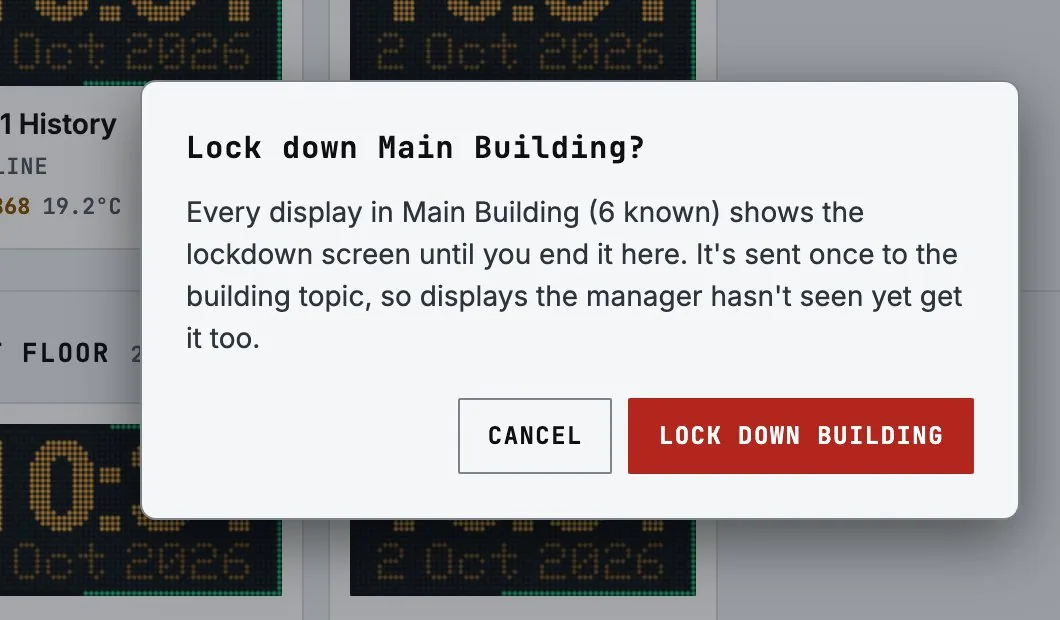
| Lockdown | Stopping an attacker getting in or moving through the building, and keeping people safely inside. | Break glass, keyswitch and keypad triggers; lockdown of a room, a building or the whole site from the Manager; the lockdown sign on every display; every computer locked to a full-screen instruction; hall screens and TVs taken over; lockdown messages over SchoolSafe PA; lights, sounders or door controls switched automatically. |
| Evacuation | Getting people out safely, by a route that avoids the threat. | Fire exit signs on displays and computers; a single evacuation sequence that combines PA announcements, messages and signs; Who is in for a live roll call by building, with a list of people not heard; spoken, zoned announcements. |
| Invacuation | Bringing people from outside into a safer part of the premises. | Zoned SchoolSafe PA announcements to playgrounds, car parks, grounds and corridors; “stay inside” instructions on every display; staff buttons that show where people are, so you know who is still outside. |
| Communication | Alerting staff and the public quickly, and keeping them informed. | Messages on displays and computers; staff alert buttons that raise a call for help showing where the person is; an alerts dashboard for reception; email alerts; clear status everywhere until the all clear. |
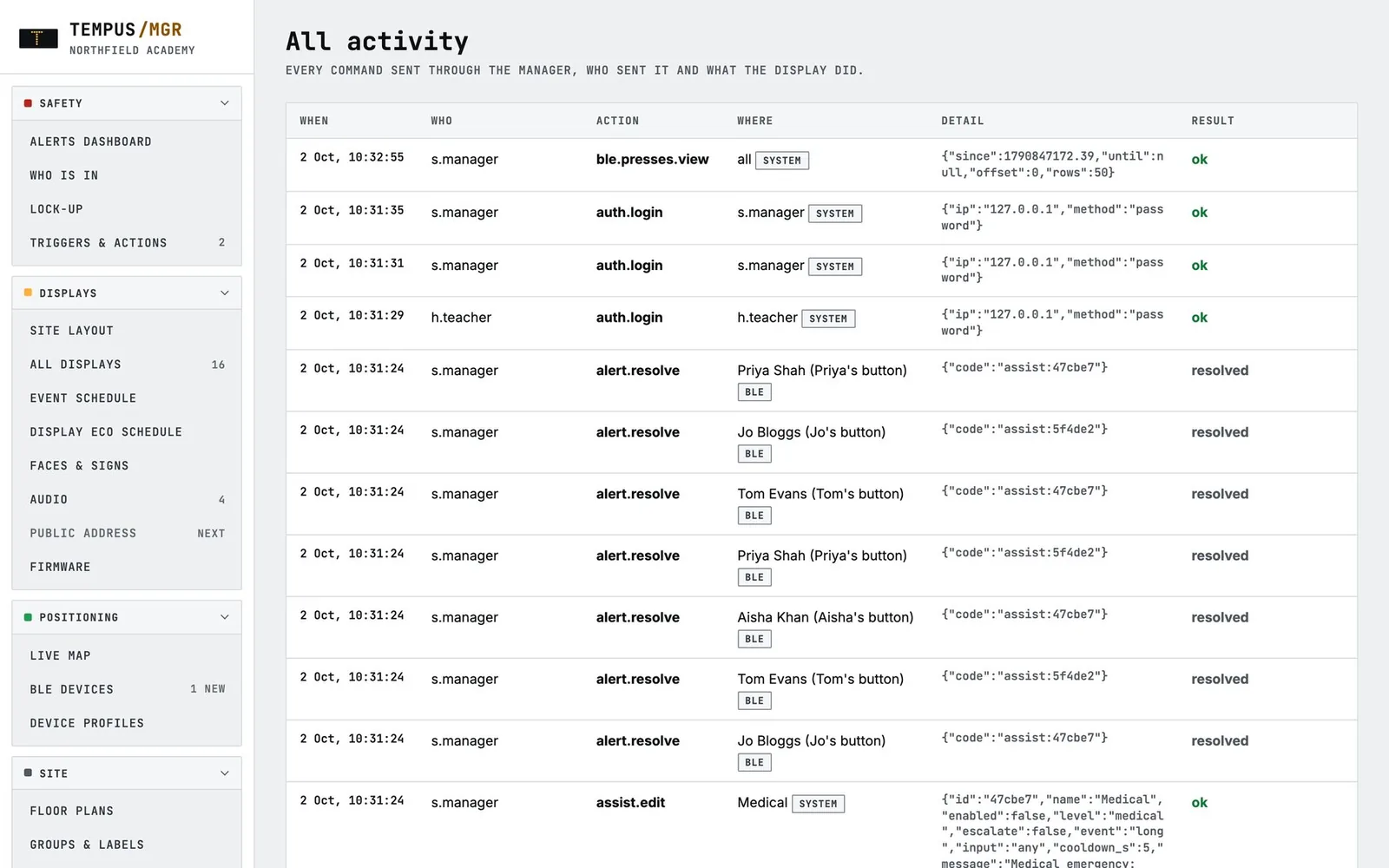
| Records & testing | Showing the regulator what you have in place, and that it works. | A full record of every alert, who sent it and what happened; triggers you can test without setting them off; recorded drills; constant monitoring so a faulty break glass point or speaker never goes unnoticed. |
Built to keep working
A safety system can’t depend on everything going right.
Reaches the unknown
A site or building lockdown reaches every device at once, including newly installed ones.
Local fallback
If the on-site server is unavailable, displays keep running and can still be put into lockdown locally.
Nothing goes quiet unnoticed
Triggers, speakers and every other device are monitored. If one stops responding, you’re told within a minute.
Catches up
A computer that was asleep shows the lockdown as soon as it wakes up.
Martyn’s Law FAQs
Martyn’s Law questions we’re asked most
Does Martyn’s Law require a lockdown system?
The Act doesn’t name specific equipment. It requires procedures for lockdown, evacuation, invacuation and communication that are reasonably practicable for your premises. In practice, a lockdown alert system is what lets staff carry out those procedures quickly and consistently. It’s also how you show the regulator that the procedures work.
Can we use our fire alarm for lockdown?
Only if the lockdown signal is clearly different and can’t be mistaken for “evacuate”. Getting that wrong could send people towards a threat. Tempus gives you a distinct lockdown alarm: spoken lockdown messages over SchoolSafe PA, and a lockdown instruction on every display and computer, all separate from your fire alarm.
Who does Martyn’s Law apply to?
Premises and qualifying events where 200 or more people may be present at the same time. That includes schools, colleges and universities, hospitals, places of worship, leisure centres, libraries, offices open to the public, shopping centres and entertainment venues. Standard duty applies from 200 people and enhanced duty from 800.
When does Martyn’s Law come into force?
The Act received Royal Assent on 3 April 2025. The duties are expected to come into force in spring 2027, after an implementation period of at least 24 months.
What is invacuation?
Invacuation means moving people from outside, or from an exposed area, into a safer part of the building. For example, you might call pupils in from the playground or visitors in from a car park. Zoned announcements to outdoor speakers are the most effective way to do it quickly.
Who enforces Martyn’s Law, and what are the penalties?
The Security Industry Authority (SIA) is the regulator, with powers to inspect premises and issue penalties. Fines can reach £10,000 for standard duty premises, plus up to £500 a day while non-compliance continues. For enhanced duty premises and qualifying events they can reach £18 million or 5% of worldwide revenue, whichever is higher, plus up to £50,000 a day. Failing to respond to an SIA information notice can also bring a penalty.
What should we be doing now?
Work out which tier you fall into and write down your four procedures. Then check whether staff can raise a lockdown alert, and whether everyone on site would hear it and understand it straight away. That last question is where most sites find gaps, and it’s what Tempus is built to close.
No product makes you compliant. Here’s what does.
Martyn’s Law is about reasonably practicable procedures, staff who know them, and records that show it. Be wary of anyone selling a “compliant” box. Tempus is the tool that lets your procedures happen in seconds, everywhere at once, and leaves an audit trail behind — but the plan, the training and the notification to the SIA are yours.
We’re happy to walk through your procedures and show how each step would run on Tempus. This page is general information, not legal advice. For the definitive position, see the SIA’s guidance on GOV.UK and ProtectUK.